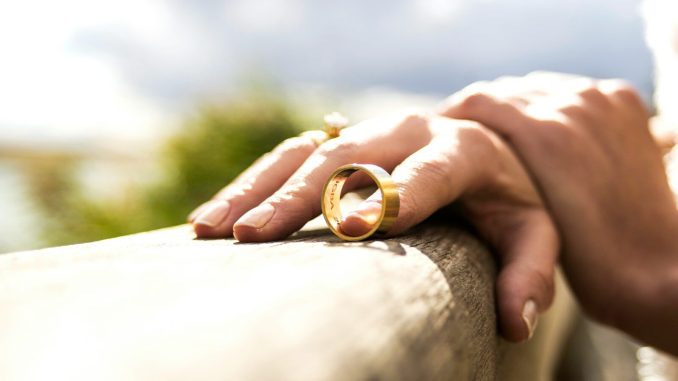
More than one in eight adults are divorced in some parts of Wales, as a breakup and divorce coach says the idea that the end of a marriage represents a personal failure needs to change.
Census figures show particularly high concentrations of divorced adults in several Welsh local authorities, including Neath Port Talbot, where 13% of adults were divorced or had previously dissolved a civil partnership.
The figure rises to 13.2% in Denbighshire, while the proportion stands at 12.7% in Blaenau Gwent, 12.5% in Bridgend, 12.4% in Wrexham and 12% in Caerphilly.
The figures offer a snapshot of just how common divorce has become within communities across Wales.
And with more than 100,000 divorces taking place across England and Wales in 2023 alone, relationship expert Monika Braglewicz says it is time to talk more openly about what happens after a marriage comes to an end.
More than 100,000 couples divorced in a year
There were 102,678 divorces granted in England and Wales in 2023, according to the Office for National Statistics (ONS).
These included 101,906 opposite-sex divorces and 772 divorces between same-sex couples.
Far from being something that happens predominantly to newly married couples who quickly discover they’ve made a mistake, the figures show many marriages have lasted for years before ending.
Among opposite-sex couples who divorced in 2023, the median marriage had lasted 12.7 years.
For Monika, founder of Coach with Monika, that is important because ending a long marriage can involve rebuilding far more than someone’s romantic life.
“When you’ve spent 10, 15 or 20 years with somebody, your life can become completely intertwined with theirs,” she said.
“You might share a home, children, finances, friends, traditions and plans for what you thought the next 20 years would look like.
“When that ends, people can feel as though they’ve lost their whole life rather than one relationship. That’s why telling somebody to simply ‘move on’ isn’t particularly helpful. They often have to work out what moving on actually looks like.”
‘Was the whole marriage a waste?’
One of the most damaging ideas surrounding divorce, Monika says, is the belief that if a marriage ends, the years spent within it somehow no longer count.
It can leave people looking back at a decade or more of their lives and wondering whether they made the wrong decision.
But she believes the length of the average marriage ending in divorce tells a different story.
“A relationship doesn’t have to last until one person dies for every year of it to have been worthwhile,” Monika said.
“You can have loved somebody deeply, built a family with them, travelled together, supported each other through difficult periods and had many genuinely happy years, while also accepting that the relationship isn’t right for you anymore.
“Those two things can both be true.
“One of the hardest things after divorce is resisting the urge to rewrite the entire marriage as either wonderful or terrible. Real relationships are rarely that simple.”
Divorce has changed too
The legal process surrounding divorce in England and Wales has undergone a major change in recent years.
No-fault divorce came into force in April 2022, meaning couples no longer need to assign blame to one person or rely on a period of separation to legally end their marriage.
Around three-quarters of divorces under the new system in 2023 were sole applications rather than joint ones.
While the law may now allow couples to separate without formally blaming each other, Monika says removing blame from the emotional side of a breakup can be much harder.
“People naturally want an explanation when something painful happens,” she said.
“After a divorce, that can turn into hours spent thinking about who was responsible, what you should have done differently or whether you could have prevented it.
“Of course it’s useful to reflect on a relationship and understand what happened. That’s how we learn from our experiences.
“But there’s a point where reflection can turn into punishment. Going over the same events hundreds of times won’t change them.”
Starting again can be particularly daunting after a long marriage
For somebody separating after more than a decade, being single may bear little resemblance to the last time they experienced it.
Dating has changed. Their financial circumstances may be different. They may have children to consider, a home to divide and an entirely different idea of what they want from a future relationship.
Some may not want another relationship at all.
Monika says one of the biggest mistakes people can make is putting pressure on themselves to immediately create a replacement for the life they’ve lost.
“There can be this panic of, ‘I’m starting again’, but you’re not actually starting from zero,” she said.
“You’re bringing years of experience with you. You know far more about yourself, what matters to you and what you will and won’t accept than you did when you first got married.
“The first question doesn’t need to be, ‘When will I meet somebody else?’ It can simply be, ‘What do I want my life to look like now?’”
Divorce is common, but it can still feel isolating
The Welsh Census figures show that thousands of people within individual communities have experienced the end of a marriage or civil partnership.
Yet Monika says divorce can still feel remarkably lonely when somebody is the one going through it.
Friends may be happily married. Family members may struggle to understand the decision. Mutual friendships can become awkward and someone who was previously part of a couple can suddenly feel conspicuous attending events alone.
There can also be pressure to appear as though everything is fine long before it actually feels fine.
Monika said: “Divorce is common enough that almost everybody knows somebody who has been through it, but when it’s your marriage ending it can still feel incredibly personal and isolating.
“You don’t need to have your new life figured out immediately.
“There’s a period where things are going to feel unfamiliar, and that’s OK. The aim isn’t to get back to being exactly the person you were before the marriage. You’ve lived a whole life since then.
“It’s about taking what you’ve learned and deciding what you want the next chapter to look like.”
A different way of looking at the end of a marriage
With around 13% of adults recorded as divorced or having dissolved a civil partnership in parts of Wales, Monika believes there is value in changing the way people talk about relationship endings.
Divorce can involve grief, anger and significant upheaval, particularly when children, property and finances are involved.
But she argues that ending a marriage does not automatically mean somebody has failed at relationships – or that they cannot go on to build a happy life afterwards.
“People congratulate us when we get married, but we don’t really have a language for acknowledging how much courage it can sometimes take to leave a life that no longer works,” Monika said.
“Nobody gets married hoping they’ll eventually divorce. But if it does happen, your life isn’t over and those years weren’t automatically wasted.
“You’re allowed to be devastated that something ended and hopeful about what comes next at exactly the same time.”