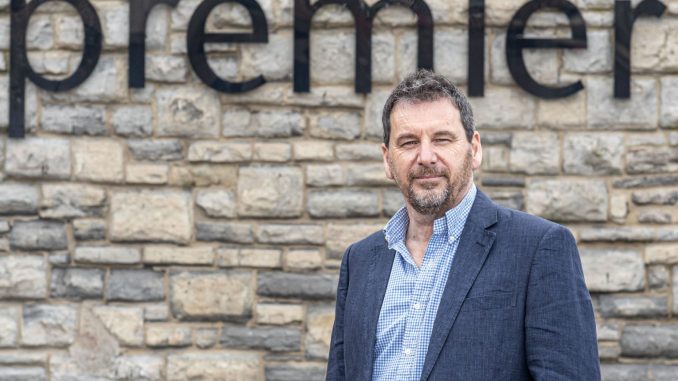
By Terry Edgell, CEO and Co-Founder, Premier Forest Products
There was a time when businesses could measure success purely in terms of profit and growth.
Those days are gone.
Today, customers, investors and employees increasingly judge businesses not just on what they produce, but on how they operate, who they employ and the impact they have on society. Trust has become a commercial asset, and businesses that fail to recognise that risk being left behind.
The most successful companies know that how they grow is just as important as how fast they grow. Customers expect more. Employees expect more. Communities certainly expect more.
That is why Corporate Social Responsibility (CSR) matters not because it creates another report to publish, but because it defines the kind of business you choose to be.
For me, CSR begins with a simple question.
What difference does your business make beyond the products you manufacture or the services you provide?
At Premier Forest Products, we have always believed our responsibility extends beyond the factory gate.
We are fortunate to employ nearly 800 people across the UK, and with that comes an opportunity to strengthen the communities where we operate.
That is why we have invested in helping people overcome barriers to employment, including our support to care-experienced young people through our corporate parenting programme, prisoner rehabilitation and our commitment to the Armed Forces Covenant.
None of those initiatives started because someone told us we had to do them. We did them because they aligned with the values our business was built on.
That’s not to say these programmes have been without challenges. Supporting people who have faced significant barriers to employment requires patience, flexibility and a willingness to look beyond a CV. But the rewards for individuals and for the business have consistently outweighed the effort.
We have seen people develop confidence, build careers and become valued members of our teams. Those experiences have reinforced my belief that inclusive employment is not simply the right thing to do; it is also good business.
Over the years, I have seen first-hand what happens when you give someone an opportunity instead of judging them by their past.
Given the right support, they flourish not because they have been treated differently, but because they have finally been given the chance to prove themselves.
That experience is one of the reasons I am proud to have been appointed Chair of the New Employment Opportunities Network (NEON) Newport initiative. NEON forms part of Homewards, the homelessness programme established by The Royal Foundation of The Prince and Princess of Wales.
Homewards is built around an ambitious objective: making homelessness rare, brief and unrepeated. NEON recognises that employment is one of the most powerful ways to achieve that ambition.
Stable work creates independence. It builds confidence and it reduces the likelihood of someone reaching a crisis point or homelessness becoming a recurring cycle.
NEON is an employer-led network that brings together businesses, public services and community organisations to create sustainable pathways into work. Through ongoing, wraparound support for both employers and young people, it helps people not only access employment but thrive in their roles and build long-term careers.
No business can solve homelessness on its own, but every business can decide whether it is prepared to become part of the solution.
I do not believe inclusive recruitment is an act of charity. I believe it is good leadership.
Of course, creating those opportunities requires commitment. It means investing time, providing support and sometimes challenging traditional recruitment practices.
But that is exactly what leadership looks like.
The commercial benefits are real. Diverse teams bring different perspectives. Loyal employees stay longer. Businesses that genuinely contribute to their communities earn trust from customers, partners and future employees alike.
The social benefits are even greater.
Imagine if every employer committed to creating just a handful of meaningful opportunities for people facing homelessness or leaving care.
Collectively, we could change hundreds of lives.
That is why I believe CSR should never be viewed as a department or a reporting requirement. It should be embedded in the culture of every business. At Premier Forest, that is exactly how we see it.
The businesses that will thrive over the next decade will not necessarily be the biggest or the fastest growing. They will be the ones that earn the trust of their employees, customers and communities by demonstrating that success and social responsibility go hand in hand.
CSR is not about ticking boxes or satisfying regulations. It is about deciding what kind of organisation you want to build and what legacy you want to leave. That is a conversation every business leader should be having.
I encourage any businesses and organisations interested in joining NEON’s Newport board or supporting the initiative to contact me to find out how they can become involved.